Showing posts with label Interesting. Show all posts

Thursday, April 26, 2012

Climate Change In The American Mind with Anthony Leiserowitz

Anthony Leiserowitz
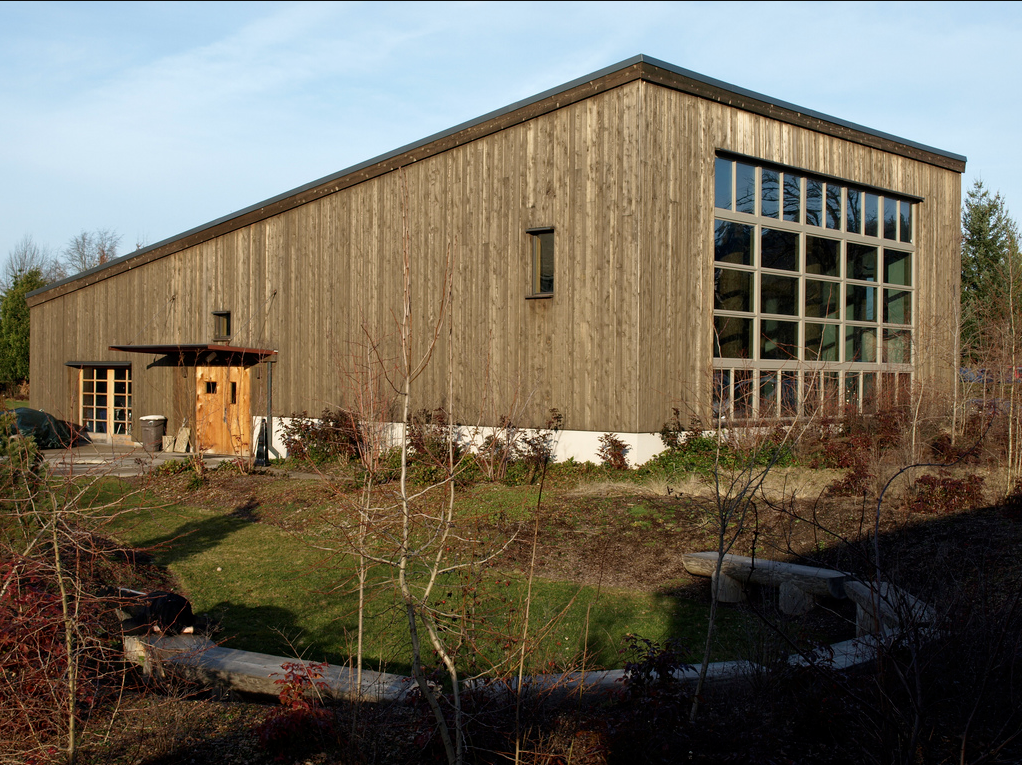
Last night I attended a guest lecture titled Climate Change in the American Mind, with Director of the Yale Project on Climate Change, Anthony Leiserowitz, Ph. D. The event housed here at the University of Oregon in the very environmentally friendly building, the Many Nations Longhouse. The U of O is a familiar place for Leiserowitz, a few years back he received his Masters and Ph. D here. Among many, he is recognized as an expert on climate change and public opinion, both American and internationally and has been an adviser to many public policy officials.


Many Nations Longhouse at the University of Oregon
Opening his talk, he illustrated the issue of misunderstanding of climate science and the question of why some people are very interested about the issue and why others are much less so. Basing off three major pillars of consumer behavior, social norms, and political behaviors he continued to explain his process of research, and from that research over many years, a model of outreach. Highlights of outreach including the media, individual journalists, weather-casters, and regular folk perspectives.

Looking back over the past decade or so, there has been a generally moderate level of belief that climate change has occurred and is continuing, but then a sudden drop in 2010, and since then belief has still not been back up to periods prior. Leiserowitz likens this to the proceedings of the tobacco debates many years ago and that many Americans feel climate change is less about themselves as Americans, but much more as a distant issue. This phenomenon he mentions is a key point; that there is a disassociation of the issue between every day Americans and the effects along with solutions of climate change.

In 2010, Leiserowitz points to a perfect storm of issues that caused this sudden decline in public opinion towards climate change. The five major sources coming from the 1) economic recession, 2) declining media coverage, 3) unusually cold weather, 4) an effective denial industry, 5) "climategate" (wikipedia article). Many of these issues were propagated through a very strong message of denial through the rise of the Tea Party and Republican control of the House of Representatives.
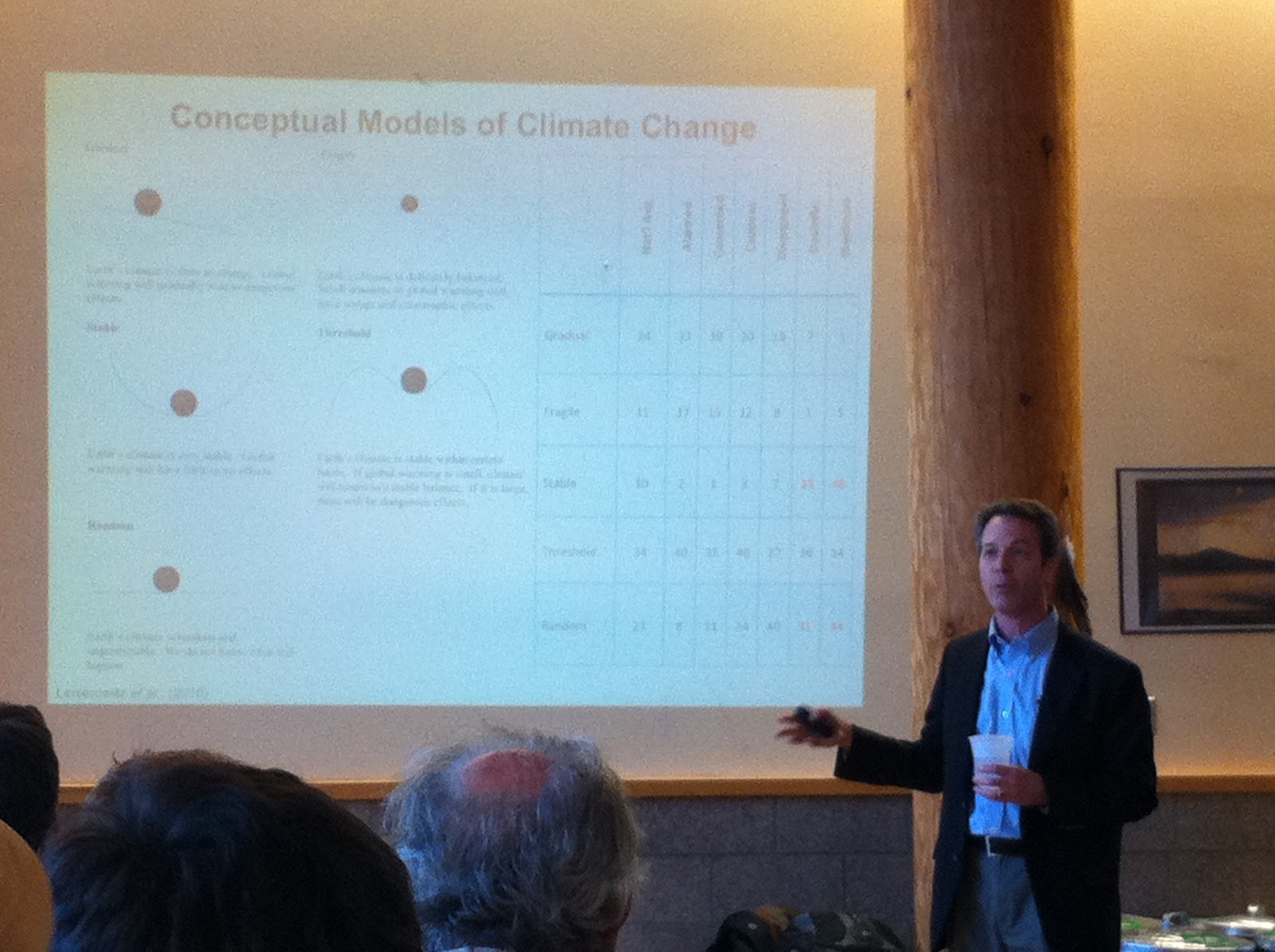
Leiserowitz Speaking at the U of O
The next point he wanted to make is that there are multiple forms of nay-sayers. All of which have different reasons. Further that he describes there are Six Types of Americans with respect to climate change. First there are the alarmed, people who are very nervous about the potential affects of climate change who represent 12% of the population. Next, there are the concerned, people who are concerned but not very nervous, 27% of people. Then the cautious, representing 25%. The next three personifying the deniers, with disengaged (10%), doubtful (15%), and dismissive (10%). What is key here to note Leiserowitz says, is that while there are more people towards the attentive side, the firmly convinced minority of dismissive individuals are very loud "soap boxers" and are well representing in congress along with the media.

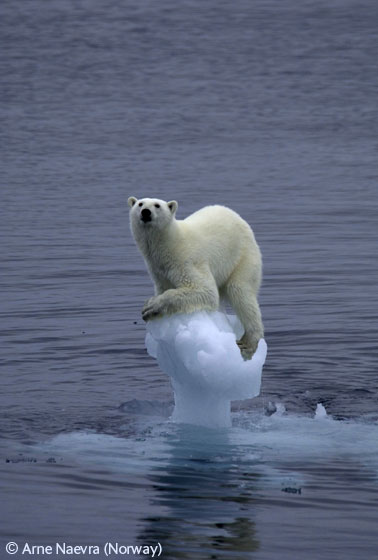
When he asked the crowd, which was almost bursting outside of the medium sized room, what the first image was when they heard the term climate change or global warming, overwhelmingly (including  myself) pictured ice melting. From his research, he has found that this is the most common image in the American mind and it is one that creates a problem. "How many people here live or have been to Antartica?" he asked us. No one had raised their hands. "There is the problem, this reinforces the distant association of the issue. Americans don't associate the positive feedback effects or the connections of the issues." 
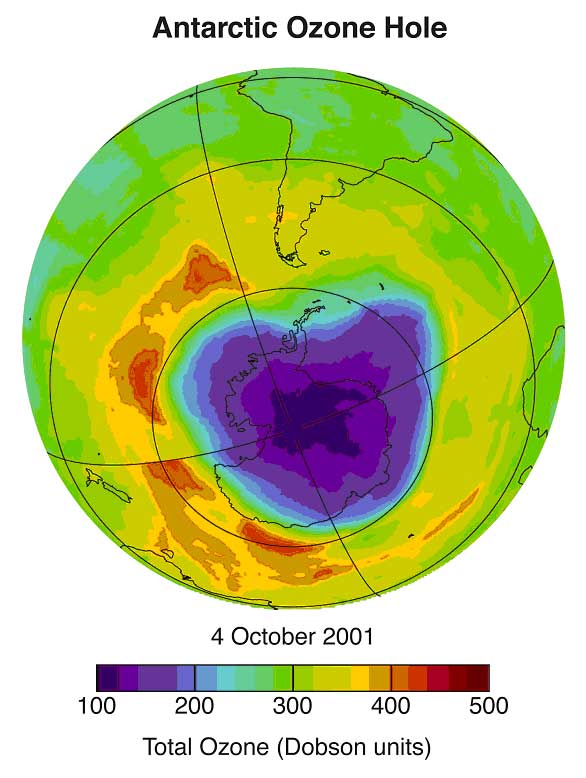

O-Zone Hole Model
Much of this he claims are due to the progression of climate and environmental issues in the American mindset. For example, over the three past decades, Americans and the world have looked at solving the O-Zone Layer Depletion as a being a first step in global environmental preservation. People have been subjected to new problem after another, with little time in between. Thus they are collected and blend together each of these different issues. For example, many people incorrectly associate O-Zone depletion with climate change, even though they are separate issues. Furthermore, O-Zone Depletion has a simple mental model that comes along with it.  Something that climate change does not have is this simple mental model. It is a hard system to depict in the mind. There are the shocking aspects of seeing a polar bear on a single piece of ice, but it is harder to connect the systems of a warming planet to increases in disease around the world. Interestingly, very few, to almost no one associates the connection climate change has to the impact of human health. Instead, simply put, most people do not connect the dots and have a very just about polar bears mindset.
Shocking Image of Climate Change

Leiserowitz points to how there is a significant difference between the egalitarian mindset, one that favors the equality among living entities, and the individualism present in American culture. Interestingly enough, the most important issue to the individualism mindset is the demand for freedom and independence of fossil fuels and of foreign based energy sources. When asked if this mindset is present in other nations around the world, Leiserowitz cites that the four most common places, Canada, the United States, United Kingdom, and Australia, all have two things in common; all are of ruggard frontier mindsets (minus the U.K.) and are English speaking. Does this translate perfectly, he was not willing to say definitively, but merely suggested some link in ideology.

In conclusion, Leiserowitz suggests a few ideas towards the future with climate change. First, a diverse support of the population is needed, not just from a few politicians, concerned citizens, and scientists, but that many more people need to form a silent majority of sorts, that support their electorate to make decisions that will be rewarded. Next, to recognize that many people who are very strongly in support of addressing the issue live in bubbles. Noting that here in Eugene, we are a sub-culture of super green fanatics, and that this is not something seen in other places around the United States. For example, when I was in New Orleans working on a post hurricane Katrina service project, I never came across recycling stations or really anything of the concept. Finally, that knowledge is necessary but insufficient, rather that we need societal demands and actions of change rather than individual ones.

If you would like to learn more about Anthony Leiserowitz and his work surrounding climate change and public opinion, please follow the link below to his profile at Yale and his web-site. Also, be sure to watch the video below, where Leiserowitz explains the Six Types of Americans. 


Leiserowitz on the Six Types of Americans: 


Additional Links:

Profile:
http://environment.yale.edu/profile/leiserowitz/

Yale Project on Climate Change Communication Homepage:
http://environment.yale.edu/climate/


Thursday, April 5, 2012

What the Average American Consumes

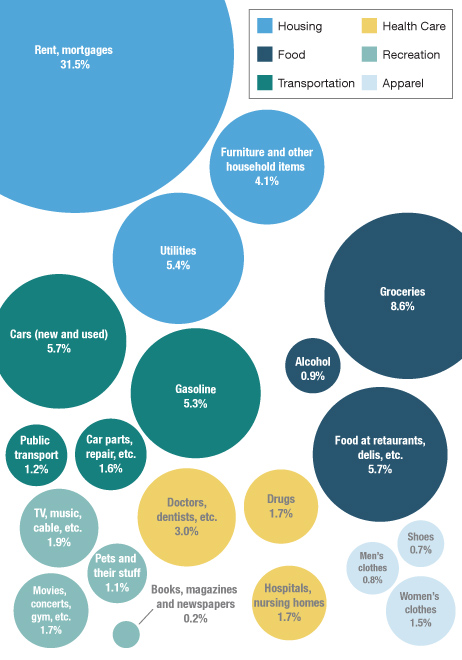
NPR's Planet Money program used data collected by the Bureau of Labor Statistics to break down what the average American buys. The data was part of CPI Detailed Report for December 2011. The figure below is from this report (it can be found on the below link) and it details up to approximately 93% of what Americans use their incomes for. From what I can discern, this is after taxes disposable income. Keep in mind also, this is just average, it won't necessarily be what you spend.

Here's a few big expenditures:

Rent/Mortgages: 31.5%
Groceries: 8.6%
Food at Restaurants, delis, etc: 5.7%
Cars (new & used): 5.7%
Doctors, Dentists, etc: 3%

Some interesting ones:

TV, Music, Cable, etc: 1.9%
Movies, concerts, gym, etc: 1.7%
Books, Magazines, Newspapers: 0.2%
Pets and their associated goods: 1.1%
Shoes: 0.7%
Women's Clothing: 1.5%
Men's Clothing: 0.8%


Note: I find it rather interesting first of all that Americans spend significantly more on shoes than on all books, magazines, and newspapers. Furthermore, this gives a bit more notice to how there is a significant shift in America from the old form of physical media to more electronic media (music, TV, etc).

Also, as can be expected, women spend far more on clothes than men, almost twice as much in fact.

Many commenters on the article noted that healthcare should be far higher. I assumed it would be, but then I realized the aspect of averages (youth tend to spend less on healthcare than older generations), and thus this being the case, possibly that is a "low-researched" answer.

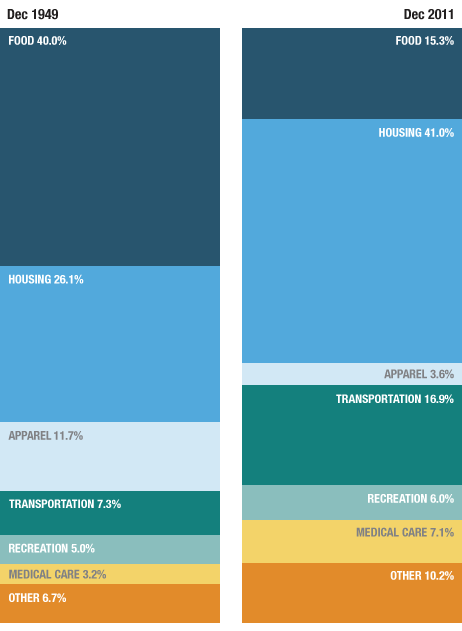
Comparing 1949 to 2011: 

American's spend far less on food today as they did 62 years ago, almost 25% less in fact. There has almost been a complete switch in expenditure in housing expenses and food during this period as well. Transportation has risen, along with health care, but notably, apparel has decreased significantly ( maybe higher quantities of low cost clothes [Old Navy]?).


What do you think you spend your money on?

For more visit NPR's Planet Money page:


 http://www.npr.org/blogs/money/2012/04/05/149997097/what-americans-buy

Friday, March 16, 2012

Confessing When Innocent

I am a huge fan of Law & Order and I am always consumed by the idea that the episode's perpetrator (or "perp" as they say in Law & Order) should be locked away and the key thrown away. Of course, this make-believe world is just that, fake. Nevertheless, I would assume some of the methods depicted in the show are relatively close to the real world, of course with added dramatic nature.

That is why I found it quite interesting to read a story in the Economist that wrote about a study published in Law and Human Behavior by Saul Kassin and Jennifer Perillo of the John Jay College of Criminal Justice in New York that suggests many innocent people simply confess to crimes they never in fact committed. This goes back to an example of the Innocence Project who since 1992 has used DNA evidence to exonerate 271 people who were wrongly convicted, in which a quarter of those 271 people actually confessed or plead guilty to the crime they were accused of.

This is bit of a mystery. Why would one confess to a crime, even more plead guilty in the court of law to a crime they knowingly did not commit? While the answers are not entirely conclusive as to why this happens, through laboratory tests, it seems many innocent confessors do so when interrogation techniques are added to the means of finding the truth. Some of these techniques include bluffing, such as the police suggesting a camera is present or that evidence exists that is not really in existence, or in some cases made up evidence intended to trick the person to confess.

The research suggests that confessions are a means to end the unpleasant experience of interrogation. I also wonder if some people simply don't want the shame and also confess to protect their psyche or family/loved ones.

Its an interesting pattern, and while some of these people may have mental disabilities or ulterior motives, it further gives the need to have concrete evidence of criminal behavior and further that uses of extreme interrogation methods may just not be all that effective.

For more: http://www.economist.com/node/21525840

For some added humor, you can watch this Star Wars Parody of an integration droid http://www.youtube.com/watch?v=hV9_3R1NHnE&feature=player_embedded#!

Friday, February 17, 2012

Don't Like Rap or Opera, You're Not Alone..


In yesterday's Deceptive Cadence from NPR Music, the question of "why do people hate rap and opera?" was put to the test. From their survey of listeners, the same two responses came up very often, "rap is not my music" or "very little opera is worth bothering with."  From this it became pretty obvious that more than any other genre, these two strike a certain dislike among people. Why is that the case though? Rap and opera are both unique and can be very enjoyable in their own right. I don't particularly like either, its just not my taste of music.

Taste is a very complicated beast to try to figure out. Economists are just one of the many groups of researchers constantly trying to unravel what people desire. Tastes are connected to self-esteem, personal branding, and creating social divisions based on things like class and education says the article. 

Bethany Bryson a researcher who produced this 1996 article in the American Sociology Review says that people use their musical tastes to erect "symbolic boundaries" between themselves and others. 

Both genres have their unique markets in a sense. Opera has typically been for rich, white, and the elderly snobs, while rap has been made for poor, young, black thugs says the article. Both creating their own forms of prejudicial classifications. 

In a sense both of these genres are on the fringes of the musical universe, and from that they marginalize just who might be the most devoted of fans. Its really an interesting examination of tastes and how society views their decision making. It goes to show, that using price models are not always effective in products of heterogenous nature. For economists, we try to consider rational consumer choice, and when factoring in the variable of tastes, it is practically impossible to account for everyone and what they will do. The possibilities are endless. 

So too are the possibilities for what humans will do. Music tastes are just one example of the many things people have very specific demands for. 

If you would like to read more, visit the link below to the original article on NPR.