Showing posts with label Technology. Show all posts

Tuesday, March 6, 2012

LulzSec / Anon Demolition Day

The leader of the LulzSec / Anonymous had been working with the FBI for the past seven months, all in a plan to take down the online hacking community. The hacker who goes by "Sabu" in the world of hackers and Hector Xavier Monsegur in the real world was captured and turned by FBI agents upon the threat of spending years in federal prison, without the chance to see his young children. Upon that, Sabu, protecting himself, gave up his hacker community leaders and today arrests were made, effectively striking the biggest blow to the group ever.

Will this be the end of LulzSec / Anonymous, probably. Is it the end of hacking and a group that is going to band together like this again? Probably not. What how has permanently changed is that their psychological aspect is completely destroyed. No longer can they pretend to be invincible or unbreakable. So maybe we will see another hacker group in the future, but probably not at the level seen with Anon / LulzSec.


http://www.foxnews.com/scitech/2012/03/06/hacking-group-lulzsec-swept-up-by-law-enforcement/#ixzz1oLNwgxdp

http://gizmodo.com/5890825/lulzsec-leader-betrays-all-of-anonymous

http://gizmodo.com/5890886/read-the-full-lulzsec-indictments-right-here

Friday, March 2, 2012

Neil deGrasse Tyson Warns of the Costs of Cutting NASA

Neil deGrasse Tyson elements exactly what types of positive externalities come out of funding NASA. Currently we fund NASA half a penny for every tax dollar collected. Tyson suggests that a doubling of the funding of NASA to just 1 penny for every tax dollar would change the culture of a nation. I agree. In economics, reference the Romer Model. Furthering on the Solow Model, a landmark model in macroeconomics, Romer pointed to technology being not only the determinant of growth, which Solow suggested, but that the function of technology growth is based upon the population of a nation, the percentage of people focused on research, and then the direct improvements based upon that technology.

Positive macroeconomic growth in the nation is based on a shift in focus from just short run growth with sales, to making the investment in research for tomorrow. I agree 100% with Neil deGrasse Tyson, and I disagree with the trend of defunding NASA that President Obama is continuing. If our future generations are to compete, NASA, education, and infrastructure are what we need to focus on. Give a free market the tools to succeed, and let this nation bloom, that is a strong government mindset.

Watch the interview with Neil deGrasse Tyson on Fox Business:
http://video.foxbusiness.com/v/1483676909001/the-costs-of-cutting-nasas-budget/


Thursday, February 16, 2012

Combination of the Personal Computer and Mobile

With today's sneak peak of Mac OS X Mountain Lion, Apple took one more step to combining the experience iPhone, iPod Touch, and iPad users love to the Mac. Some of these features will be the Reminders App, Notification Center, Game Center, and one piece I really think could a revolutionary, the ability to port your screen wirelessly to a TV or projector using an Apple TV. All of these features are great, and on my iPhone I use them all the time.

Something I find interesting is how both Microsoft with their next major release of Windows and Apple with OS X, are using the markets of smartphones and tablets (mainly iPad) to drive what their innovations are with personal computing. Its really pointing to a path where computers, tablets, and smartphones will all be constantly in sync with one another given services such as iCloud. Really, I think this has been a void in mobile computing that has long been overshadowed. I remember the days of Palms, where I would love spending time writing ideas on my Palm device, but spending many wasted hours trying to sync these ideas over to my Mac/PC, all to find errors, or incapability issues. Finally, producers are waking up to these issues and really making strides to connect the bridge. It really a great direction for people who love our gadgets and I think it opens many more doors for the future.

Also, notably in their sneak peak of Mountain Lion, Apple demonstrated many new features tailored specifically to people in China and the millions of Chinese people around the world.  This also shows a strong sense of where Apple wants to take their strategic position in China. China is a huge market, and Apple is taking a big step to expanding this market with features specifically for the Chinese.

For more information about the Sneak Peaks of Mac OS X Mountain Lion and Microsoft Windows 8, follow the links below:

OS X Mountain Lion:

Microsoft Windows 8: 


Update 10:36am: David Pogue of the NY Times shares his thoughts on Apple OS X Mountain Lion
link:

Wednesday, February 1, 2012

Facebook On The Decline?

Today Facebook went public, applying for its initial public offering, hoping to raise $5 billion. In 2011 it made $1 billion of profit on $3.7 billion of revenue. With 800 million users it's a formidable force on the internet. So we think.

So why do I think Facebook will be gone within the next 5-10 years? I have a couple reasons.

First, Facebook has become a massive directory of people. It's not a personal social network anymore, rather it's a giant address book of sorts where instead of having your favorite people in your contact list like on your cell phone, it's like having the entire phone book on your phone and you have to sift through people. Each of them have a diminishing marginal value to you because there are just simply too many of them. While there are options to filter your friends, it's still a cumbersome and ugly process that presents little functionality. In a sense our life is on the web for ALL our 1000 friends to see.

Second, Facebook is not private. This goes along with the first problem, but is something I think is a fundamental failure of Facebook. I have read some economic papers that suggest many Americans abandoned the crowded cities of the 20th century to venture into the suburbs for the reason of privacy. Of course there were other reasons, but it's necessary to note that Americans love their privacy. Facebook does not promote privacy at all. Im fact with the recent timeline feature, all of our lives from the very moment we joined up on Facebook are easily shown, from those embarrassing photos to those comments where we use the swear word. All of which is quite embarrassing and presents us a chance to have our peers, and employers included, change their opinions of us. Not a popular thing there.

Third, going along further with the privacy issues, Facebook also is getting old from its original users and as we get older, do we want the same content from our distant pasts to GE broadcasted to the rest of the world? I don't mind because I don't have embarrassing photos or other content, but still, many others do. Will Facebook be the adolescent cool thing and as we get older and more mature, will it just be uncool? I think for many, it will.

Fourth, Facebook is a tool for the U.S. government to spy on Americans and other people from around the world. Given its big name, as people want privacy from this increasingly invaded private lives, they will venture to smaller networks that are less watched and considered underground so to speak.

Finally, I just think people have this trend to smaller private networks that will make each friend more valuable than just a number on your friend list.

Google+ is what I think a future model, but will have to have other services in order to work.

I like Facebook to an extent, but I would like an alternative too. I think others will agree and over time, Facebook will be just another giant to meet its sunset like other former Internet giants.

Tuesday, January 3, 2012

Text Messaging Decline?


According to an article written by Tero Kuittinen and published in Forbes, text messaging has shown a decline over the past few years around the world. Mobile carriers in Finland have seen significant drops on the biggest single day use of text messaging services, the eve of Christmas. On Christmas Eve of 2010, customers on Finland's most dominant carrier, Sonera, sent 10.9 million text messages, just one year later this number has dropped to 8.5 million. In other countries around the world where SMS text messaging grew rapidly and initially took off during the 1990's, such as the Netherlands and the Philippines, there have been an assumed switch from text messaging to social media, email, and IP-based messaging services. Possibly the countries that brought text messaging to a popular stage are leading the ones that will lead into future services.

In the United States, At&t and Verizon have yet to feel signifiant drops in usage, but are expected to feel some SMS erosion in the future. Some 20% of carrier earnings are from text messaging, thus if customers continue to find ways to circumvent text messaging plans, carriers will need to find ways to recapture these drops in revenue. Thus, expect higher data fees in the future.

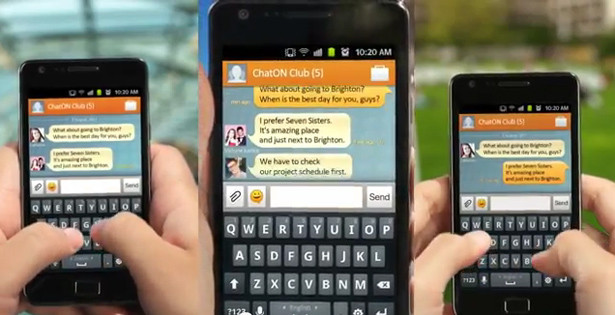
I am rather surprised by this data. I use text messaging daily, along with my close friends and even my parents. I do see the advantages of services like Skype and AIM, but text messaging has the unique feature to reach directly to a phone, and by phone, any phone on any carrier. Unlike AIM or Skype, the person you are contacting must have the capabilities of data and apps/web-browser like you, thus your ability to communicate is lacking. With the surge of iPhone customers since 2007, services like iMessage, a service that connects iPhones, iPod Touches, and iPads use similar messaging services like SMS text messaging, only that they are transferred via data connection (EDGE, 3G, 4G, or Wi-Fi) instead of through a small range of frequencies on voice calls. In my opinion, the future of text messaging will be a seamless option service of text messaging and a form of internet based messaging. The network economics of reaching an entire pool of customers is key and having the service directly installed and readable on all phones is also paramount. I would expect Android to release a very similar feature as Apple has with iMessage within the next updates.

So question for my audience. Do you use text messaging and by guess how many texts do you send a day?

For more on this subject, visit this post on Forbes.

Thursday, August 4, 2011

China's New Labor Force: Robots

China's largest individual employer, other than the People's Liberation Army has unveiled a new plan to replace huge amounts of human labor with robots. The plan will take action over the next few years and be at a general completion around 2013. The company which I am referring to is Foxconn, a company initially hailed for its ability to hire mass amounts of workers and produce electronics for some of the worlds largest clients, including Apple Inc. Recently the company has been plagued by worker suicides, in which the latest was a 21-year old who threw himself off a building in July. Additionally a major explosion happened at a new factory in Chengdu which killed three more employees. (Click here for more info on Foxconn)


Foxconn has responded to their more than 1 million workers by raising wages, improving conditions at their facilities, providing counseling, and installing nets to catch those jumping out of windows. Of course these have raised costs at the factories and for a company that prides itself on producing components for the worlds leading tech companies at the lowest possible cost, they are looking for alternatives. That is where robots will come in.

Foxconn's CEO Terry Gou said that the more than 1 million workers will be moved “higher up the value chain beyond basic manufacturing work” and of its “desire to move workers from more routine tasks to more value-added positions in manufacturing such as research and development, innovation and other areas that are equally important to the success of our operations.” 


To me, this presents a brave new world for China. Of course this is not the first time robots are being used in the factory process, but when a company as massive as Foxconn decides to transfer human worker hours into machines, jobs will inevitably be lost. China becoming more an more like a capitalist nation under communist rule, needs consumers to grow. If work has already been strained as well as a major division between the rural and urban lifestyles, how will China look like if their massive population cannot find work? China's heart is manufacturing in this modern economy, if manufacturing money comes in from foreign nations, but only sits in the hands of the company/government, what will this mean for the people of China? 


For more information about Foxconn's move into robotic labor, follow this link to The Economist.